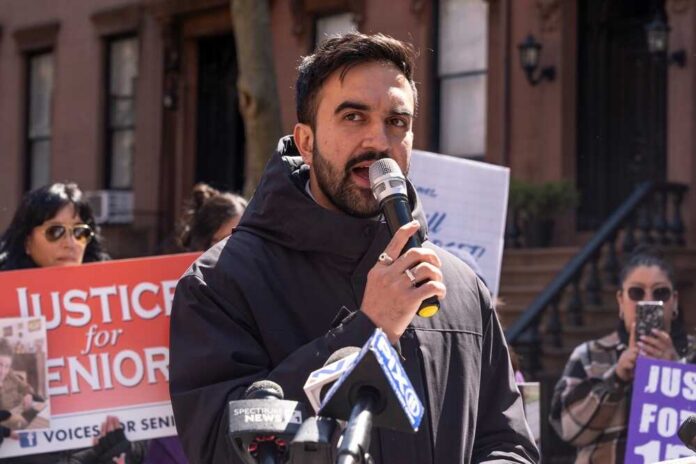
Socialist New York City Mayor Zohran Mamdani is facing a lawsuit from his own supporters who overwhelmingly voted for him, yet now seek to block his homeless shelter plan in their affluent neighborhood.
Story Snapshot
- Ten East Village residents who backed Mamdani by a 40-point margin filed suit to block a homeless shelter in their neighborhood
- Lawsuit challenges city’s use of emergency declaration to bypass environmental and legal reviews for shelter conversion
- Conservative observers highlight irony of progressive voters rejecting socialist mayor’s homelessness policies when implemented locally
- Case exposes classic NIMBY dynamics even in NYC’s most liberal district, testing Mamdani’s ability to execute campaign promises
Progressive Voters Sue Socialist Mayor Over Shelter Plan
Ten East Village residents filed a lawsuit in Manhattan Supreme Court against New York City to block Mayor Zohran Mamdani’s plan to convert a building at 8 East 3rd Street into a temporary homeless shelter for adult men. The plaintiffs, organized through the Village Organization for the Integrity of Community Engagement (VOICE), voted for Mamdani by a stunning 40-point margin in the 2025 election. The lawsuit alleges the city bypassed required environmental and legal reviews by invoking a 2022 emergency declaration originally intended for asylum-seekers, not homeless shelter relocations.
NEW: Socialist NYC Mayor Zohran Mamdani is being hit with a lawsuit from his own supporters to stop a homeless shelter from going up in their neighborhood.
The East Village voted for Mamdani by a 40-point margin — and now residents are pushing back on his latest agenda item. pic.twitter.com/F8qdrIUnuM
— Alex West (@west_alex1776) April 24, 2026
The legal challenge centers on the city’s decision to fast-track the shelter conversion following the planned May 2026 closure of the deteriorated Bellevue Shelter. Plaintiffs argue the administration made a “hastily made and legally invalid decision without following legal requirements,” including the Uniform Land Use Review Procedure. The suit raises concerns about safety, environmental impacts, and property values in the densely populated neighborhood. This procedural shortcut contradicts the transparency and community input that progressive voters typically demand from government, revealing a disconnect between campaign rhetoric and administrative reality.
When Progressive Policies Hit Home
The East Village represents one of New York City’s most liberal enclaves, where residents enthusiastically supported Mamdani’s Democratic Socialist platform promising expanded services for the homeless and marginalized populations. Yet when those policies arrived at their doorstep, these same voters mobilized legal opposition. This classic Not In My Backyard response demonstrates a broader problem plaguing American governance: voters often support expansive government programs in theory but resist implementation in their communities. The lawsuit exposes how even well-intentioned progressive policies can face fierce resistance from their own base when abstract principles become concrete realities.
Conservative commentators, including Senator Ted Cruz, seized on the irony, amplifying the story across social media as evidence of progressive hypocrisy. The situation underscores a fundamental tension in urban governance where campaign promises meet practical constraints. Mamdani campaigned on addressing homelessness through NYC’s right-to-shelter mandate, but the lawsuit reveals his administration’s willingness to bypass legal safeguards mirrors the executive overreach conservatives have long criticized. When government officials cut corners to implement their agenda, regardless of political ideology, they undermine the rule of law that protects all citizens from arbitrary decision-making.
Broader Implications for Urban Policy
This legal challenge carries significant implications beyond one Manhattan neighborhood. The lawsuit tests whether cities can repurpose emergency declarations designed for specific crises to circumvent established review processes for unrelated policy goals. Mamdani’s administration invoked a 2022 declaration addressing asylum-seeker housing needs to justify rushing through homeless shelter conversions, raising questions about the scope and duration of emergency powers. If courts allow this expansion, it sets precedent for future administrations to bypass community input and environmental protections whenever officials deem action urgent, concentrating more power in executive hands.
The case also highlights how both conservative and progressive voters increasingly recognize a common frustration: government officials prioritize political agendas over transparent processes and community concerns. Whether the issue involves homeless shelters, energy projects, or housing developments, Americans across the political spectrum grow weary of top-down decisions that ignore local input. The East Village lawsuit demonstrates that when elected officials, even those with strong mandates, disregard established procedures, they erode public trust and invite legal challenges from their own supporters. This dynamic transcends partisan politics, revealing deeper concerns about accountability and whether government truly serves the people or simply serves itself.
Sources:
Social media erupts after Mamdani’s far-left supporters turn on him over homeless shelter – Fox News
New Yorkers in the East Village sue Mamdani to stop relocation of homeless shelter – Fox23 Maine
Social media erupts after Mamdani’s far-left supporters turn on him over homeless shelter – WFIN