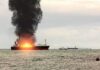
A six-week-old conflict in the Middle East has choked off critical global supply routes, leaving governments scrambling to prepare for shortages of everything from food and fuel to blood and vaccines as over 2,000 ships remain trapped and 10 million barrels of oil per day vanish from world markets.
Story Snapshot
- Strait of Hormuz closure has trapped over 2,000 vessels and eliminated 10% of global oil supply, triggering cascading shortages across food, energy, and manufacturing sectors
- UK government’s secret analysis warns of imminent shortages in chicken, pork, blood supplies, vaccines, and CO2 for food processing as fertilizer and petrochemical shipments remain stranded
- Jet fuel stocks have dwindled to approximately six weeks remaining while U.S. gasoline prices surpass $4 per gallon, threatening aviation and driving costs nationwide
- Hidden dependencies in multi-tier supply chains expose businesses previously thought insulated from Middle East disruptions to severe material shortages and production delays
Hormuz Chokepoint Triggers Global Crisis
The ongoing Iran war, now entering its seventh week, has completely shut down the Strait of Hormuz, the narrow waterway that typically handles roughly 20% of the world’s oil traffic. This full closure marks an unprecedented escalation beyond past regional tensions, with over 2,000 commercial vessels stranded and approximately 10 million barrels per day of oil production wiped from global markets. The disruption represents a $50 billion hit to oil supply and has forced shipping companies to reroute vessels around Africa, dramatically increasing transit times and costs while creating bottlenecks that ripple through every sector of the global economy.
Food Security Threats Mount Rapidly
The conflict’s impact extends far beyond energy markets into food supply chains, where stranded cargoes of fertilizers, grains, oils, and petrochemicals threaten both immediate shortages and future harvest failures. UK government analysis, leaked to The Times, reveals preparations for shortages of chicken, pork, blood supplies, and vaccines. Supply chain experts warn that CO2 used in meat processing faces disruption, while fertilizers critical for upcoming growing seasons remain trapped in Persian Gulf ports. Lisa Anderson of LMA Consulting notes that even companies without direct Middle East suppliers face vulnerabilities through hidden second and third-tier dependencies in packaging materials and dairy inputs that most executives never mapped.
Aviation and Energy Sectors Face Critical Shortfalls
Airlines confront a looming crisis as jet fuel stocks decline to approximately six weeks of remaining supply, raising the specter of flight cancellations and service reductions across the industry. U.S. consumers already feel the pain at the pump, with gasoline prices climbing above $4 per gallon as the 10% reduction in global oil supply drives commodity markets higher. European nations have begun implementing energy rationing measures while businesses reassess inventory strategies and diversification plans. The scale of this disruption surpasses the 2022 Ukraine conflict’s grain and energy shocks, with experts from Oxford Economics warning that a prolonged war will lead to severe shortages across multiple critical sectors simultaneously.
Supply Chain Vulnerabilities Expose Systemic Weaknesses
The Iran conflict has laid bare the fragility of interconnected global supply chains, where political leaders’ decisions can cascade into empty shelves and production halts thousands of miles away. Dean Alms of Aravo Solutions urges companies to map their full supply tiers and deploy AI-driven scenario planning tools to identify hidden risks. This crisis underscores a fundamental problem that frustrates Americans across the political spectrum: our economic security remains hostage to conflicts orchestrated by elites and foreign powers, while everyday citizens face rationing, inflation, and uncertainty. The mad rush by governments and corporations to implement contingency plans only after disruptions occur reveals the short-sighted prioritization of globalist efficiencies over national resilience and energy independence that many warned against for years.
As the war drags on with no clear resolution in sight, the compounding effects of fertilizer shortages threaten agricultural output for the coming harvest season, potentially locking in food price inflation for the next year. Businesses are accelerating nearshoring and supplier diversification initiatives, though such structural changes cannot resolve immediate shortages. The crisis demonstrates how decades of outsourcing critical supply chain elements to volatile regions has left Western nations vulnerable to supply shocks that directly impact citizens’ access to basic necessities. Whether this moment finally prompts a genuine rethinking of America-First supply chain policies or merely produces temporary adjustments remains the critical question for families watching grocery bills climb and wondering if their government serves their interests or those of multinational corporations and foreign entanglements.
Sources:
How the Iran Conflict Is Disrupting Global Supply Chains – Oxford College of Procurement and Supply
Iran war disrupts food supply chains as Strait of Hormuz crisis deepens – FoodNavigator
Disruption Has Become the Name of the Game – ISM
A long Iran war will lead to severe shortages says Oxford Economics – Intellinews