Cheap imports once looked like a bargain, but Secretary of State Marco Rubio now says that policy “deindustrialized our country and cost us millions of jobs” — and the Trump administration is moving to rebuild American manufacturing and supply chains.
Story Snapshot
- Rubio says offshoring was a conscious policy choice that gutted U.S. industry and shipped millions of jobs overseas.
- He argues cheap prices came at the cost of lost factories, broken communities, and dangerous dependence on foreign powers.
- President Trump’s team is using tariffs and targeted industrial policy to bring critical production and medicines back home.
- Economists still debate whether trade or technology drove job losses, but the social and security risks of deindustrialization are now hard to ignore.
Rubio’s Warning: Deindustrialization Was a Choice, Not Fate
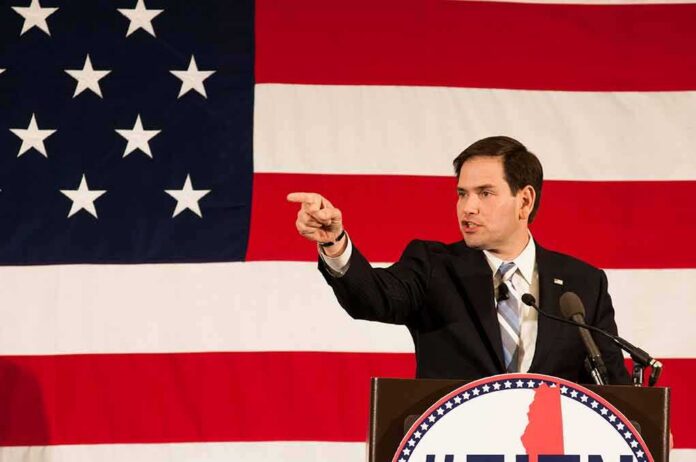
Secretary of State Marco Rubio has made it very clear that America’s manufacturing decline did not “just happen” on its own. At the Munich Security Conference, he told allied leaders that deindustrialization “was not inevitable” but the result of a “conscious policy choice” to chase cheaper production overseas. He argued that Washington embraced dogmatic free trade while rival nations protected their industries, subsidized factories, and built up their own power. For many conservative voters, his message matches what they have watched in their hometowns for decades.
Rubio’s core point is simple and blunt: “Prices were cheaper… but it ended up deindustrializing our country and costing us millions of jobs.” He says leaders from both parties let corporations move plants abroad, ship products back, and pocket larger profits while American workers were left behind. Reports from policy institutes back up the scale of the loss, with millions of manufacturing jobs disappearing since 2000 and tens of thousands of factories closing. These are not abstract statistics; they match the shuttered plants and empty main streets many readers see every day.
How Cheap Imports Hollowed Out Jobs and Communities
Rubio has long argued that the 2000 decision to support China’s entry into the World Trade Organization opened the door to a wave of unfair competition. Researchers have found that surging imports from China displaced millions of American jobs, especially in manufacturing and in working-class regions. Manufacturing employment fell sharply in the 2000s, with roughly six million jobs lost compared with the late 1970s. Studies also show that deindustrialization brings social costs, including higher poverty, weaker families, and rising drug abuse in affected communities.
For conservatives who grew up in factory towns, Rubio’s description of “shipping millions of working and middle-class jobs overseas” feels like lived experience rather than theory. He links these job losses to a breakdown in local life — fewer good-paying jobs to support families, less tax revenue to fund schools, and more despair as people slip into long-term unemployment. That social damage matters as much as any chart of gross domestic product or stock prices. It is also why he frames industrial strength as part of keeping the United States a “free and prosperous republic,” not just an economic slogan.
Trump, Rubio, and the Push to Rebuild American Industry
Under President Trump, Rubio is now helping drive a clear policy shift: bring critical production home and end rewards for offshoring. He has supported tariffs and new trade rules that punish companies for moving factories abroad while selling back into the U.S. market. He backed efforts to block generous clean energy tax credits for automakers that close American plants and open new ones overseas, arguing taxpayers should not subsidize job flight. He and Representative Ro Khanna also proposed a National Development Strategy to restore manufacturing leadership and strengthen supply chains.
Prices were cheaper… but it ended up deindustrializing our country and costing us millions of jobs."
Secretary of State Marco Rubio says decades of prioritizing low-cost manufacturing overseas hollowed out America's industrial base.
pic.twitter.com/uzQ4WVdb1h— @perkinsights (@perkinsightz) August 2, 2026
Trump officials have carried the same logic into vital areas like medicine, telling drug companies it is time to make essential generic drugs in the United States or at least closer to home. Rubio has stressed that certain capacities, like pharmaceuticals and defense-related production, are non-negotiable for national security. He helped launch an Economic Diplomacy Action Group to align foreign policy with economic priorities, so that trade and alliances serve American industry instead of undermining it. Together, these steps aim to reverse decades of policy that treated the industrial heartland as expendable in the name of cheap imports.
Debate Over Causes: Trade, Technology, or Both?
Not everyone agrees with Rubio’s diagnosis or cure. Free-trade advocates and some economists argue that much of the decline in manufacturing jobs came from technology and higher productivity, not trade deals. One study estimates that nearly ninety percent of manufacturing job losses from 2000 to 2010 were due to automation and efficiency gains, which let factories make more with fewer workers. Other research notes that overall manufacturing output has stayed strong, even as the share of workers in the sector has fallen over time.
Rubio and many conservatives do not dismiss these facts but say they miss the bigger picture. They argue that even if productivity played a large role, policy choices about trade, currency, and offshoring made the adjustment harsher and more one-sided. The question is not only how many goods America can produce, but where those plants are located and who controls key supply chains. On that front, recent crises — from medical shortages to foreign threats — have proven how risky it is to depend on adversaries for basics like medicine, electronics, and energy. That reality is driving today’s push to reindustrialize.
What It Means for Conservative Voters
For conservative, Trump-supporting voters, Rubio’s message ties together several long-running frustrations. They watched “globalism” and cheap imports undercut blue-collar jobs while the same elites pushed open borders, radical social agendas, and massive spending. Now they hear a Secretary of State saying out loud that deindustrialization “has cost us dearly” and that the West must “reclaim control over their industries” and rebuild manufacturing capacity. That is more than rhetoric; it is a call to defend national strength and community life at the same time.
Rubio’s stance also links economic policy to core constitutional and family values. A strong manufacturing base supports independent families, not citizens reliant on government welfare or foreign supply lines. Bringing factories and drug plants back to U.S. soil reduces dependence on regimes that do not share American ideals and may threaten security. While experts can debate the exact share of job losses caused by trade versus technology, the Trump administration’s direction is clear: stop rewarding companies that abandon American workers, rebuild key industries at home, and make sure our nation “can make things” again.
Sources:
facebook.com, youtube.com, profarmer.com, state.gov, x.com, foxnews.com, cato.org, presidency.ucsb.edu, newsweek.com, linkedin.com, amo.house.gov, nationalaffairs.com, rubio.senate.gov, sbc.senate.gov, washingtonpost.com, floridapolitics.com