A pro-Palestine mural meant to signal “resistance” is now igniting a backlash in Richmond because many Black residents say the image resurrects an old racist stereotype.
Quick Take
- A mural in Richmond’s Northside shows an Afro-Palestinian woman holding a watermelon slice with “Free Palestine” spelled in seeds, alongside other Palestinian symbols.
- Some Black residents and local leaders say the watermelon imagery carries a long U.S. history of racist caricature and should not be displayed prominently in a historically Black neighborhood.
- The mural was installed without broad neighborhood consultation, fueling complaints about public-art ethics and gentrification dynamics.
- Opponents say they want changes or replacement rather than a scorched-earth culture war, proposing alternatives like flag imagery for solidarity.
What the Mural Shows—and Why Location Matters
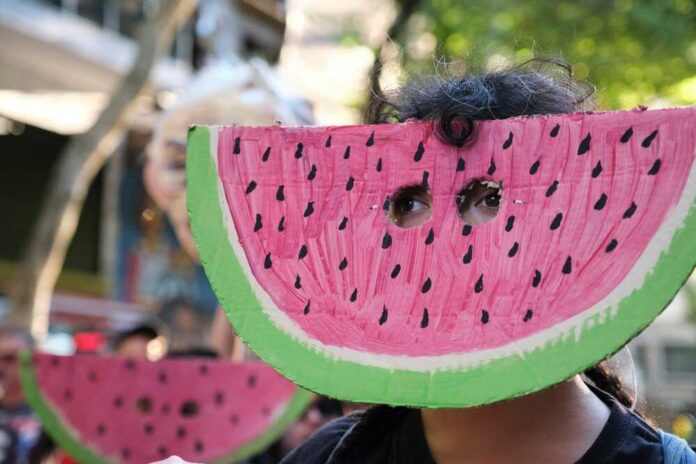
Richmond’s controversy centers on a large mural at North Avenue and Brookland Park Boulevard in the city’s Northside. Reporting describes the artwork as depicting an Afro-Palestinian woman holding a watermelon slice, with the seeds arranged to spell “Free Palestine,” surrounded by pro-Palestinian motifs such as keffiyeh patterns and olive branches. The placement is part of the dispute: Northside is a historically Black area, and critics argue imagery that may read as stereotypical hits differently there than in other Richmond neighborhoods.
Supporters point to the mural’s explicit pro-Palestine messaging and say the political meaning is obvious from the surrounding symbols. The artist, Lauren YS, reportedly intended a clear statement and expected debate about Gaza and the broader Middle East conflict. Instead, a separate controversy erupted: whether the central watermelon image—regardless of intent—carries baggage in the American context that overwhelms the intended message when displayed on a prominent wall in a Black community.
The Watermelon Symbol: Two Histories Colliding in One Image
Two symbolic histories are colliding. In Palestinian activism, the watermelon has been used for decades as a form of resistance, tied to the fruit’s colors resembling the Palestinian flag and to restrictions that at times limited overt flag displays. In the United States, critics emphasize the watermelon’s well-documented use in racist propaganda after emancipation, when caricatures portrayed Black Americans as lazy, childish, or uncivilized. That legacy makes the image uniquely sensitive when paired with a Black figure in a public-facing mural.
Local leaders arguing for changes have framed the dispute around impact rather than intent. Civil-rights advocate Gary Flowers, who has expressed sympathy for Palestinians, has still objected to the image choice and questioned why it was placed in Northside instead of another neighborhood. Another critic, Jonathan Davis, has argued that public art carries obligations beyond an artist’s personal message—especially when the wall sits in a community that will live with the visual every day, including children who pass it near school and nearby public spaces.
Process Complaints: Public Art Without Public Consent
The process is a major part of the anger. Accounts indicate the mural was discussed at a Brookland Park Business Association meeting before installation, but without the design being shown, and that neighbors were notified informally rather than through a broad, transparent review. The property owner/coordinator who approved the mural has defended the clarity of its pro-Palestine intent, but critics say “clarity” is not the same as community consent. Without a clear citywide approval structure, disputes become reactive and divisive.
That dynamic is familiar to many conservatives who have watched institutions use “the message” to bulldoze common-sense objections. This isn’t a Second Amendment fight, but it does underline a civic lesson: when elites or activists treat neighborhoods as canvases instead of communities, tension is predictable. Richmond’s debate shows how quickly politics can become a pretext for bypassing local voices—then demanding everyone accept the result as a moral fait accompli rather than a decision that should have included the people who live there.
Press Conference and Calls for Modification, Not a Purge
By late February 2026, the mural remained up while debate intensified. A press conference at the site on February 27 highlighted objections ranging from the racist history tied to watermelon imagery to concerns about the mural’s proximity to a school and surrounding public environment. Importantly, multiple critics have emphasized they are not demanding a blanket crackdown on speech or causes; instead, they have pushed for modification, replacement, or redesigned solidarity that avoids imagery many residents consider demeaning.
Pro-Palestine Activists in Virginia Paint Watermelon Mural, Angering Black Residents Who Say it’s Racist https://t.co/xpaL1IV4b7
— The Gateway Pundit (@gatewaypundit) March 8, 2026
No resolution has been reported in the available local coverage, and is available beyond late-February reporting. What is clear is the fault line: activists and artists may view certain symbols as global shorthand, while communities may experience those same symbols through local history and hard-earned memory. If Richmond wants fewer culture-war blowups, the practical fix is straightforward—public art that’s truly public should include transparent preview, neighborhood input, and a process that respects residents before paint hits brick.
Sources:
Two things can be true: Richmond’s Northside mural debate isn’t that simple
Public walls carry public responsibility