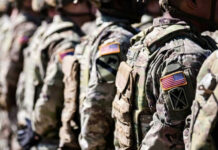
An opinion piece warns that America’s liberal factions are sending a “broken arrow”—a distress signal—to Europe, highlighting deep national divisions and signaling political vulnerability.
At a Glance
- A column in The Hill cautions that American left-wing rhetoric acts like a “broken arrow” alert to European allies.
- The term—adapted from nuclear crash codes—describes a moment of unprecedented warning about democratic stability.
- It reflects anxiety over Biden-era civil rights and immigration debates.
- The warning suggests European leaders may rethink U.S. engagement amid ideological tumult.
- The piece argues that allies are closely monitoring American discourse for signs of internal collapse.
“Broken Arrow” as Diplomatic Alarm
In a provocative opinion column published by The Hill, the term “broken arrow”—a Cold War-era code for the accidental loss of a nuclear weapon—is repurposed to characterize the American left’s increasingly apocalyptic tone. The author contends that rhetoric equating U.S. institutions to fascist regimes risks broadcasting instability to global allies.
The article singles out trends like campus unrest, overzealous DEI policies, and incendiary comparisons between U.S. governance and authoritarianism as indicators of a fractured national self-image. If these narratives persist unchecked, they may communicate to European observers that the American democratic model is eroding from within.
Transatlantic Implications
The column suggests that European capitals are interpreting left-wing American discourse not as internal critique, but as geopolitical signal. Amid growing concerns over NATO coherence, trade realignment, and Ukraine strategy, European governments may become less confident in Washington’s institutional consistency.
The warning is stark: without a rhetorical reset, even staunch allies could begin reevaluating their strategic alignment with the U.S.—not over policy differences, but over doubts in American unity and self-confidence. The author frames this as a moment for the American left to recalibrate its messaging or risk long-term diplomatic fallout.
Democratic Confidence or Signal Failure?
At its heart, the piece asks whether American democracy can withstand self-critique without slipping into performative collapse. It calls on progressive leaders to affirm democratic resilience even as they advocate reform, lest they unwittingly amplify narratives of decline.
The “broken arrow” metaphor thus becomes a double-edged warning: it captures the urgency of reform but warns against messaging that might provoke disengagement from America’s allies. The column closes with a call for a more balanced civic tone—one that resists both denial and despair.