
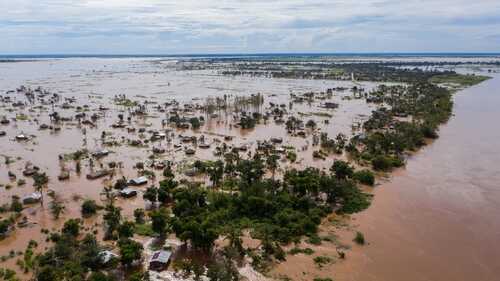
Over 600,000 Mozambicans face a catastrophic humanitarian crisis as devastating floods, described by authorities as the worst in a generation, have destroyed thousands of homes, wiped out critical food supplies, and left desperate families clinging to treetops for survival. This disaster is a stark reminder of how infrastructure failures and inadequate disaster preparedness in developing nations magnify natural disasters into preventable human tragedies.
Story Snapshot
- More than 600,000 people affected, with over 300,000 displaced across southern Mozambique provinces after weeks of relentless rainfall
- Flooding destroyed 30,000 homes, devastated 180,000 hectares of crops, and killed over 150,000 livestock, threatening widespread food insecurity
- NASA satellite imagery captured the unprecedented scale of inundation along the Limpopo and Incomati rivers, with sediment plumes extending into the ocean
- Health risks escalate as crocodiles invade flooded towns and waterborne diseases like cholera threaten displaced populations, half of whom are children
Unprecedented Rainfall Overwhelms Regional Infrastructure
Prolonged heavy rainfall from December 2025 through January 2026 pushed the Limpopo and Incomati rivers beyond capacity, overwhelming reservoirs and inundating densely populated agricultural zones across Gaza, Maputo, Inhambane, Sofala, and Manica provinces. Mozambique’s National Institute for Disaster Risk Management and Reduction declared a Red Alert on January 16, 2026, as floodwaters surged through riverine communities. NASA’s satellite imagery from January 25 revealed the catastrophic extent of flooding, showing entire towns submerged and massive sediment plumes discharging into the Mozambique Channel. This disaster underscores how inadequate infrastructure in regions prone to seasonal flooding transforms predictable weather patterns into humanitarian catastrophes.
From southern Mozambique: flooding continues to displace families and strain overcrowded shelters.
With 600,000+ people affected, UNHCR is on the ground supporting the response. pic.twitter.com/8J80lX2oIm
— UNHCR, the UN Refugee Agency (@Refugees) January 27, 2026
Massive Displacement and Agricultural Devastation
The floods have displaced over 300,000 people in Gaza province alone, with more than 50,000 sheltering in temporary facilities where children comprise half the population. International rescue teams from Brazil, South Africa, and the United Kingdom joined local operations to evacuate families stranded on rooftops and in trees. Beyond the immediate human toll, the disaster wiped out 180,000 hectares of cropland—equivalent to roughly 440,000 acres—and killed over 150,000 livestock. This agricultural destruction threatens long-term food security for communities already vulnerable to poverty and limited government support. Education Minister Samaria Tovela announced authorities are considering delaying the 2026 school year due to extensive damage to educational infrastructure.
Health Threats Compound Humanitarian Crisis
Floodwaters have introduced dangerous health risks beyond immediate drowning hazards. Health officials warn of elevated cholera and diarrhea outbreaks as contaminated water spreads through displaced populations living in crowded shelters with limited sanitation. Crocodiles, displaced from their natural habitats by rising waters, have been reported invading flooded towns, creating additional threats to stranded residents. The African Commission on Human and Peoples’ Rights issued an urgent January 23 statement calling for enhanced evacuations and aid access, emphasizing particular concerns for women, children, elderly residents, and disabled individuals who face heightened vulnerability. With cyclone season now beginning, the risk of compounding disasters looms large.
Regional Coordination Struggles to Meet Escalating Needs
The Southern African Development Community deployed an Emergency Response Team to Mozambique and South Africa from January 23 through 31 for damage assessments and coordinating regional appeals. The flooding extends beyond Mozambique, impacting over one million people across SADC member states including Eswatini, Malawi, Zambia, and Zimbabwe since October 2025. South Africa declared its own disaster on January 18. The International Organization for Migration scaled up emergency operations for over 500,000 displaced individuals by January 22. This regional crisis highlights how natural disasters exploit governance weaknesses and infrastructure deficits that leave populations dependent on international assistance rather than robust local preparedness systems rooted in self-reliance and responsible resource management.
Floods Inundate Southern Mozambique: Weeks of intense rain overwhelmed rivers and reservoirs, displacing hundreds of thousands of people.
👉🏻 https://t.co/8H0IhDtH06 pic.twitter.com/g5vlN2ADwi— Elysia Segal (@elysiasegal) January 27, 2026
Provisional government figures indicate at least 12 deaths directly attributed to the 2026 flooding, with 125 fatalities recorded since the broader regional wet season began in October 2025. As assessments continue and floodwaters persist, these numbers are expected to rise. The disaster serves as a sobering example of how environmental challenges, when coupled with inadequate infrastructure investment and disaster preparedness, produce preventable human suffering on a massive scale—a lesson relevant for policymakers worldwide who prioritize fiscal responsibility and resilient community planning.
Watch the report: Mozambique floods: People forced from homes by months of heavy rains
Sources:
Floods Inundate Southern Mozambique – NASA Earth Observatory
Mozambique May Delay 2026 School Year as Floods Hit Thousands – Channel Africa
SADC Deploys Emergency Response Team to Mozambique and South Africa – SADC
Press Release on Flood Situation in Mozambique – African Commission on Human and Peoples’ Rights