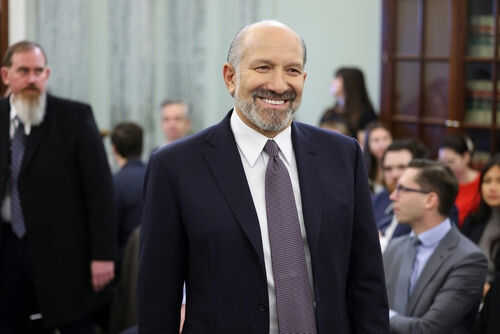
A fresh dump of Epstein records is forcing Washington to choose between real transparency and the usual elite stonewalling.
Quick Take
- Commerce Secretary Howard Lutnick has agreed to a voluntary, transcribed interview with the House Oversight Committee about past ties to Jeffrey Epstein.
- The interview follows the Justice Department’s late-January release of more than 3 million pages of Epstein-related documents that renewed scrutiny of prominent figures.
- Committee Chairman James Comer says the session will be closed-door, with a transcript released publicly after review in the coming weeks.
- Lutnick has said he wants to “set the record straight,” while President Trump and the White House have defended him as effective and “innocent.”
House Oversight moves fast after DOJ document release
Rep. James Comer (R-Ky.), chairman of the House Committee on Oversight and Government Reform, announced March 3, 2026, that Commerce Secretary Howard Lutnick will appear voluntarily for a transcribed interview connected to the committee’s Epstein-related oversight work. The agreement comes after the Justice Department released more than 3 million pages of documents in late January, reigniting public attention around Epstein’s network and who had access to it.
Comer’s announcement emphasizes the voluntary nature of Lutnick’s cooperation, a notable distinction in a town where subpoenas and lawyered-up evasions are often the default. According to the committee and press reporting, the interview will be conducted behind closed doors, and a transcript will be made public after it is reviewed. The timing for the interview has not been publicly set, which leaves the next steps dependent on scheduling and transcript handling.
What the records show about Lutnick’s contacts with Epstein
Reporting tied to the January document release describes several points that lawmakers are likely to focus on: a 2012 family visit that included lunch on Epstein’s Little St. James island, business dealings involving an advertising firm called Adfin that extended until 2014, and emails that continued as late as 2018. Lutnick has portrayed his involvement as limited, but the documented timeline stretches beyond a clean break.
Lutnick has also offered an earlier turning point, telling lawmakers he cut off contact after seeing what he described as an “unsettling massage room” around 2005. The tension for investigators is straightforward: the claim of an early cutoff sits alongside later meetings and communications referenced in document-driven reporting. The Oversight interview is designed to capture a clear, transcribed account that can be compared against records, dates, and any additional materials Congress obtains.
How the Trump administration is handling the political pressure
President Trump has publicly defended Lutnick, describing him as “very innocent” and saying he is doing a strong job in his role. The White House has similarly framed Lutnick as an “invaluable asset,” particularly given Commerce’s influence over trade and economic policy. That defense posture matters because Democrats have already pursued their own line of pressure, including a March 1 request for Epstein-related documents from Lutnick.
Based on the available reporting, there are no allegations in these sources that Lutnick committed criminal wrongdoing. The controversy instead centers on access, judgment, and disclosure: how much contact existed, what Lutnick knew at the time, and whether earlier explanations fully match the paper trail now in the public eye. For voters exhausted by two-tiered standards—where some people get endless excuses and others get relentless scrutiny—this is exactly why public transcripts and document production matter.
Why voluntary testimony matters for accountability and public trust
Voluntary cooperation does not settle the underlying questions, but it does set a basic benchmark: elected oversight should not be treated like a partisan nuisance, and the Epstein scandal should not be buried because it is politically inconvenient. If the transcript is released as promised, the public will be able to assess what Lutnick says in his own words and compare it to the dates and contacts described in the newly released files.
The broader significance reaches beyond one Cabinet official. The Epstein case remains a symbol of elite impunity, and the 2026 document release ensures the issue is not going away. Congress now faces a simple test: follow the facts wherever they lead, publish what can legally be made public, and apply oversight standards consistently across parties and powerful institutions. If officials can explain their contacts cleanly, transparency helps everyone; if not, sunlight is still the right answer.
Sources:
Howard Lutnick, Commerce Secretary, Agrees to Interview with House Committee in Epstein Probe
Chairman Comer Announces Secretary Lutnick to Appear Voluntarily for a Transcribed Interview
Lutnick to testify to House after Epstein files