
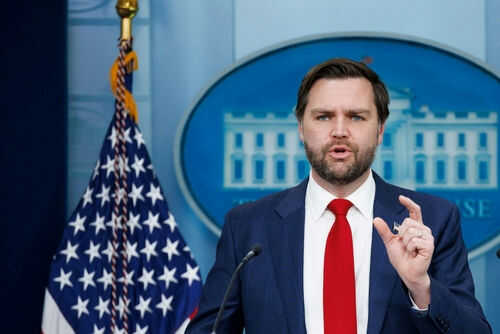
J.D. Vance is openly rejecting Milton Friedman’s playbook to push tariffs, tougher antitrust, and hands-on industrial policy to rebuild American manufacturing.
Story Highlights
- Vance backs industrial policy, steel tariffs, and tougher antitrust to revive factories.
- Free‑market critics warn this is “economic illiberalism” and will raise prices.
- Vance promotes a “working class capitalism” to lift pay for manual workers.
- Friedman’s free trade and limited government views stand in sharp contrast.
Vance’s Break With Free‑Market Orthodoxy
J.D. Vance argues that America must use targeted government power to restore key industries. He backs industrial policy to expand manufacturing, as well as tariffs to defend steel and other strategic sectors. He says past leaders let Wall Street and global elites hollow out our towns. He wants policy that turns investment back to American workers and plants in the heartland. Outspoken positions like these have defined his public remarks and interviews since 2024.
Vance also champions tougher merger reviews and supports breaking up dominant technology firms when they choke competition. He praised efforts to block giant deals and to rein in firms that manipulate markets. He accepts more government action to police corporate power, even when that differs from old GOP talking points. He argues the goal is simple: fair markets that reward work, not sweetheart deals for lobbyists and monopolies.
Working Class Capitalism and Blue‑Collar Pay
Vance calls his approach “working class capitalism.” He pushes policies that raise pay and status for people who build, repair, and ship real goods. He warns that a country run only by finance and consulting cannot stay strong. He wants tax and trade tools that reward making things at home and that punish offshoring. Supporters say this answers real pain in factory towns and can reverse decades of decline in wages and community life.
On currency, Vance has argued that a somewhat weaker dollar could help exporters and narrow trade gaps. That idea parts ways with many past Republicans who treated a strong dollar as a fixed good. He frames it as a tool to boost U.S. production and jobs. His broader message: let America compete on something other than cheap foreign labor and currency games that stack the deck against our workers.
Tariffs, Prices, and the Free Trade Clash
Marketplace reporting notes that standard economics warns tariffs raise prices and do not work well to protect jobs. That critique targets Vance’s steel tariff push. Economists fear higher input costs feeding inflation, hitting families and small shops that buy steel-heavy goods. They also warn of foreign retaliation. These are real risks that deserve honest tracking and public reporting as policies roll out and data arrive from factories and stores.
Limited‑government voices add a sharper charge. The Cato Institute calls Vance’s turn a drift into “economic illiberalism,” citing support for aggressive antitrust and state pressure on “woke” firms. They argue this swaps neutral rules for political power over business. They warn that once government picks winners and losers, cronyism grows and freedom shrinks. Those concerns echo older right‑of‑center defenses of open markets and light‑touch regulation.
Friedman’s Principles Versus Vance’s Populism
Milton Friedman taught that voluntary exchange beats government command. He favored free trade and warned that heavy intervention breeds waste and instability. He argued that steady, rules‑based policy and market choice deliver rising living standards. His views remain a bedrock for many conservatives who fear mission creep, higher prices, and politicized capital when the state takes the driver’s seat.
Friedman also argued that tariffs are pointless once we left the gold standard, returning to a strong free trade stance. That line flatly opposes Vance’s tariff case. This is the core debate now on the right: keep Friedman’s small‑government path, or use targeted state power to rebuild industry and wages. The outcome will shape prices, paychecks, and America’s capacity to produce what we need in a dangerous world.
What Matters For Readers: Results And Guardrails
Conservatives want secure jobs, fair pay, and freedom from elite schemes. Vance promises to fight offshoring, tame corporate power, and bring back factory work. Critics warn of higher prices and bigger government. The test must be real‑world results. Track manufacturing jobs, wage growth, input costs, and consumer prices over time. Demand clear limits on state power, strict transparency, and sunsets on industrial aid. Build, but do not let government run your life or your business.
Sources:
reason.com, cfr.org, npr.org, marketplace.org, theimaginativeconservative.org, americanmind.org