

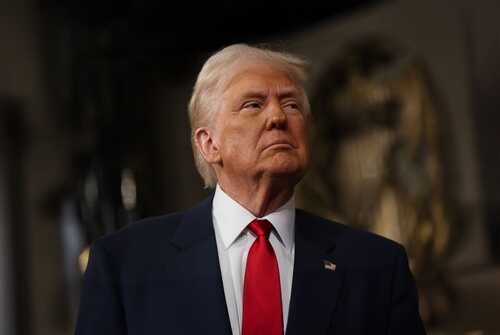
President Trump issued his most definitive warning yet to Hamas at the World Economic Forum in Davos, setting a concrete, two-to-three-week deadline for the terrorist organization to disarm. This ultimatum marks a critical turning point as Phase 2 of his comprehensive Gaza peace plan, backed by an unprecedented international coalition, enters implementation. With centralized control over the ‘Board of Peace,’ Trump is forcing a decision that could lead to peace through compliance or a devastating military confrontation.
Story Snapshot
- Trump warned Hamas to disarm or “be blown away very quickly,” setting a 2-3 week compliance timeline
- The ultimatum comes as Phase 2 of Trump’s 20-point Gaza peace plan enters implementation, with 59 countries participatingThe
- President maintains centralized control over the Board of Peace with the authority to override decisions and enforce compliance
- Hamas has not signed Trump’s plan and historically demands Palestinian statehood recognition before full disarmament
Trump Sets Definitive Deadline for Hamas Compliance
President Trump addressed the World Economic Forum in Davos on January 22, 2026, issuing his most explicit warning yet to Hamas regarding disarmament requirements. Trump stated that Hamas “has agreed to give up their weapons” and warned “If they don’t do it, they’ll be blown away very quickly.” The President established a concrete assessment timeline, noting his administration would evaluate compliance “over the next two or three days, certainly over the next two or three weeks.” This represents a significant escalation from previous statements, putting the terrorist organization on notice with measurable accountability.
BREAKING – Trump, at Board of Peace, says Hamas must disarm or it will be the 'end of them' https://t.co/taqCUyNaFA pic.twitter.com/sgKp0cc7qX
— Insider Paper (@TheInsiderPaper) January 22, 2026
International Coalition Backs Enforcement Measures
The Gaza peace plan commands unprecedented international support, with 59 countries participating in the broader agreement endorsed by United Nations Security Council Resolution 2803. Trump emphasized that many of these nations, including countries geographically distant from the Middle East, have expressed willingness to support enforcement measures if Hamas refuses compliance. Senator Lindsey Graham praised the timeline, stating “This is the right decision at the right time,” reflecting Republican consensus on holding Hamas accountable. The International Stabilization Force, commanded by Major General Jasper Jeffers, has been established to oversee security operations and demilitarization, though specific troop contributions remain unannounced.
Board of Peace Centralizes American Authority
Trump’s Board of Peace represents a new model for U.S.-led conflict resolution, with the President maintaining sole authority to invite or remove participating states, set agendas, override decisions, and interpret the governing charter. The administration appointed Aryeh Lightstone and Josh Gruenbaum as senior advisors leading day-to-day strategy and operations. The National Committee for the Administration of Gaza has been established to implement reconstruction and governance capacity-building. This centralized structure ensures American values and interests guide the peace process, though critics have noted the Gaza Executive Board includes no Palestinian representatives, raising questions about long-term legitimacy.
Hamas’s Historical Resistance Complicates Disarmament
Trump acknowledged the challenge ahead, noting that disarmament is “not an easy thing” for Hamas, whose members are “born with a weapon in their hands.” Hamas has not signed Trump’s 20-point plan and historically insisted it would refuse unilateral disarmament until a Palestinian state is established. According to framework agreements dating to 2024, Hamas has only agreed to “bury” weapons as part of a long-term truce, with complete surrender conditioned on transfer to a “genuine Palestinian government.” This fundamental tension between Trump’s non-negotiable disarmament requirement and Hamas’s preconditions suggests the compliance timeline may expose irreconcilable positions rather than facilitate agreement.
Phase 2 of the peace plan entered implementation on January 14, 2026, transitioning from ceasefire terms to demilitarization, technocratic governance, and reconstruction. The plan builds on Trump’s successful Abraham Accords framework from his first administration, applying proven Middle East peace strategies to the Gaza conflict. While critical operational details including confirmed ceasefire verification and International Stabilization Force rules of engagement remain unspecified, the President’s definitive timeline demonstrates his commitment to results over endless diplomatic posturing. The next few weeks will determine whether Hamas chooses peace through compliance or faces the military consequences Trump has clearly articulated.
Watch the report: Trump says Hamas will disarm or “we will disarm them”
Sources:
Jewish Insider – Donald Trump Hamas Disarm Davos Blown Away
White House – Statement on President Trump’s Comprehensive Plan to End the Gaza Conflict
Responsible Statecraft – Trump Board of Peace
Israel Education – Draft Charter of the Board of Peace January 2026